
Destroyer_anon
-
Posts
5 -
Joined
-
Last visited
-
 Moofda reacted to a post in a topic:
Netduma r3 is the best gaming router!
Moofda reacted to a post in a topic:
Netduma r3 is the best gaming router!
-

NEW XR500 BETA FIRMWARE: 3.3.535
Destroyer_anon replied to Netduma Lew's topic in NETGEAR Nighthawk Support (XR range)
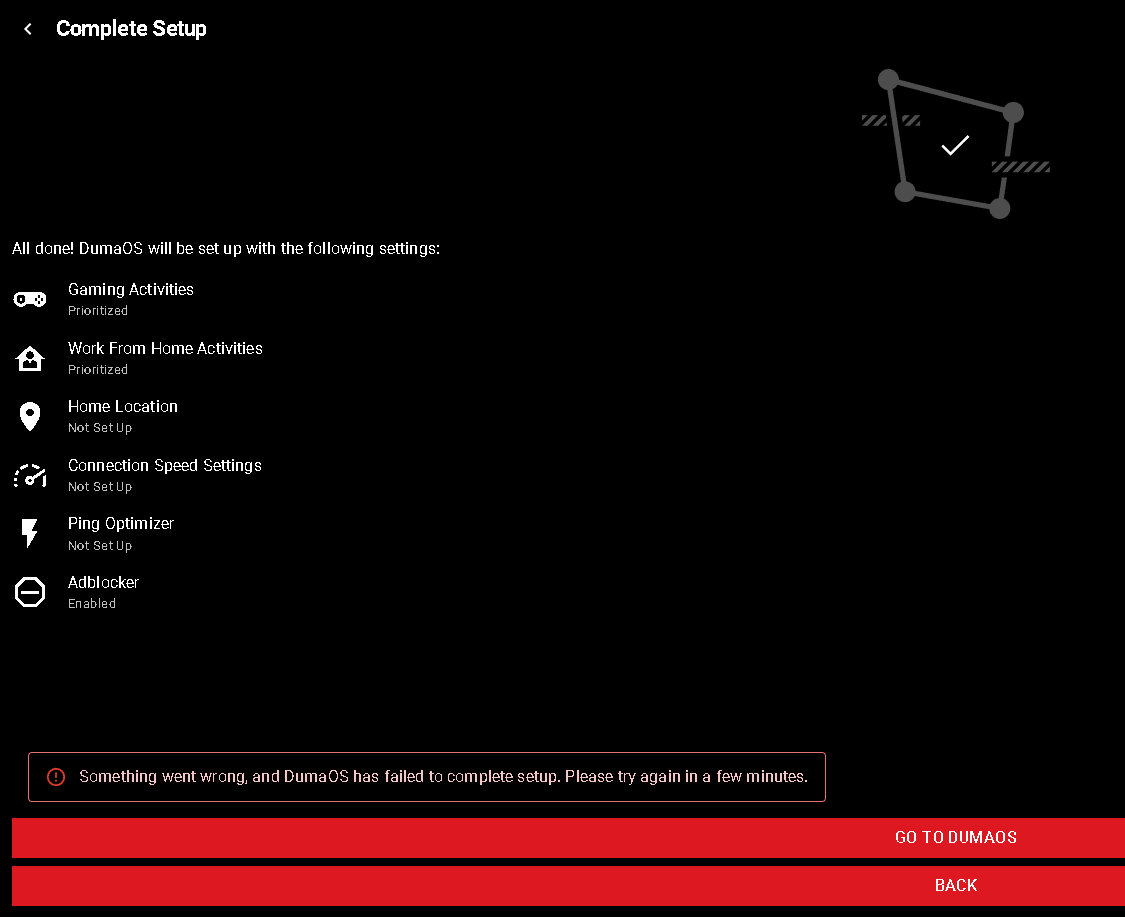
I honestly can't believe this company somehow still exists.... The firmware breaks the hardware every single time you try to install it The only way to get a version installed is by doing intermediary 'firmware' upgrades Once you DO get the system up and running, the "DumaOS" doesn't even function. I'm out, just going to spin up a Cisco 8k and ditch this janky crap.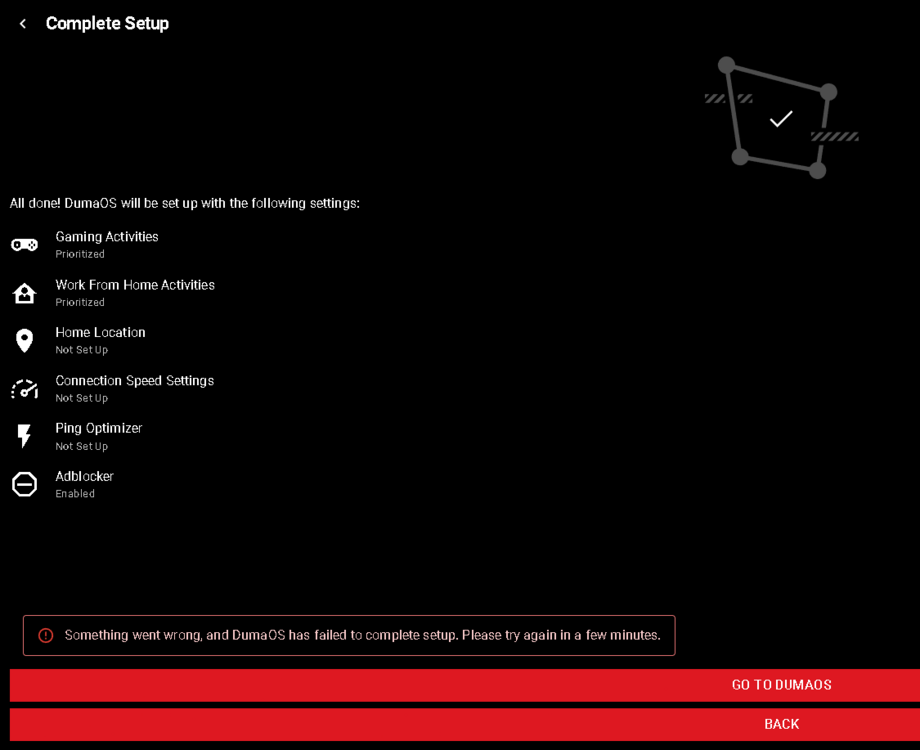
-
Destroyer_anon reacted to a post in a topic:
Bulk delete devices needed OMG !
-
Destroyer_anon changed their profile photo
-
I’m going to push back on this a bit, because the conclusion being drawn here doesn’t line up with how online games or networks actually work. I’m an Enterprise Lead Network Engineer with over a decade of experience designing and operating large-scale, latency-sensitive networks (factories, global WANs, DCs, SDN, etc.). I am also a professional competitive CS2 and FortNite player. From a technical standpoint, a consumer router cannot “manipulate lag compensation or hit detection” in the way you’re describing. How hit registration actually works: In modern multiplayer shooters (including CoD), hit detection is authoritative on the game server, not the client and certainly not your router. The general flow looks like this: Your client sends input events (movement, aim, fire timestamp) The server rewinds game state using lag compensation The server determines whether a hit occurred The result is sent back to all clients Your router never sees: Player hitboxes Server reconciliation logic Lag compensation algorithms Damage calculation It only sees encrypted UDP packets with timestamps. (along with a few checksums that are used on the backend to determine whether there has been any manipulation to the data stream, but that is entirely dependent upon game and AC used). What lag compensation really is Lag compensation exists to normalize different client latencies, not to “reward” or “punish” certain players. If two players fire at nearly the same time, the server rewinds state to each client’s perceived moment and resolves the outcome. This can feel unfair at times, but that’s a function of: Tick rate Interpolation / extrapolation Server load Packet arrival variance Player movement prediction Not the brand of router. What routers can affect (and what they can’t) At Layers 1–5, almost every modern router you listed (OpenWRT, MikroTik, pfSense, Ubiquiti, Asus, NetDuma) is doing the same fundamental job: NAT Stateful firewall Packet forwarding Optional QoS / shaping This is the ONLY thing that you might be able to argue NetDuma does 'better' than others. However, that is merely if they do it 'out of the box' vs. others that may not considering it's all adherent to RFCs and standardizations, dscp values, etc. If bufferbloat is already controlled (which you explicitly said it was), then: Latency is stable Jitter is minimized Packet loss is negligible At that point, there is no mechanism for a router to selectively improve hit registration. It cannot reorder server logic, alter rewind windows, or bias combat resolution. If it could, competitive esports would ban consumer routers overnight. Why it feels different Perceived improvements usually come from: Different matchmaking servers or routes Temporary changes in server load Variance in opponents’ latency Session-to-session network conditions Confirmation bias (especially after hardware changes) Humans are very good at pattern-matching and very bad at controlled experiments, especially when adrenaline and competition are involved. The key point If a router could truly “manipulate lag comp”: It would be detectable by the game developer It would be considered cheating It would be patched or blocked immediately No consumer router has access to the data or control plane required to do that. Final thought If you’re enjoying the R3, that’s totally fine. Stable latency and good QoS do matter. But attributing gunfight outcomes to router-level manipulation of hit detection isn’t technically accurate. The network delivers packets. The server decides who lives and who dies. Everything else is perception.
-
Destroyer_anon reacted to a post in a topic:
Netduma r3 is the best gaming router!
-
 Destroyer_anon reacted to a post in a topic:
Netduma r3 is the best gaming router!
Destroyer_anon reacted to a post in a topic:
Netduma r3 is the best gaming router!
-
Bulk delete devices needed OMG !
Destroyer_anon replied to Rickyrocks's topic in NETGEAR Nighthawk Support (XR range)
I call b.s. Sitting w/ Nighthawk XR500 and I can't bulk-delete devices, and it's 2022. ;(